Wiki
Get AI generated answers and guidance about TWM.
Open AI AssistantResponses may contain errors. Verify important information before acting on it.
Each strategy has to be created with a unique GUID. Inside Visual Studio you can go to Tools -> Create GUID to generate a unique GUID for your strategy.
To analyze potential fills during historical execution for stop-market, limit, orders TWM uses an internal BeforeBarUpdate event. The OnBarUpdate event occurs after the BeforeBarUpdate for the same bar index.
OrderAction.Buy - will open a long position, should be used on initial position opening and scaling in
OrderAction.Sell - will close a long position, should be used for closing the position or scaling out
OrderAction.SellShort - will open a short position, should be used on initial position opening and scaling in
OrderAction.BuyToCover - will close a short position, should be used for closing the position or scaling out
For live market OrderAction.Buy and OrderAction.BuyToCover will always buy and OrderAction.SellShort and OrderAction.BuyToCover will always sell.
Submitted market orders will get filled immidiatly. During historical execution TWM will use the next bar open value to fill the order.
For limit orders the following is true during historical execution.
Buy and low of the upcoming bar is equal or below the set price OR order action is SellShort and high of the upcoming bar is equal or higher to the set limit price you will get a fill with the set limit price, your order state will be marked as filled, a new position will be created and a OnOrderUpdate event will occur. In case if there was a gap you will get a fill using the rule at price or better which will use the bar open.OnOrderUpdate the StrategyBase class will perform a check for stop and limit orders fills within the same bar.
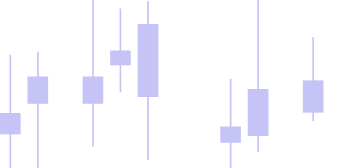
The above example clearly demonstrates where the historical order short fill has been filled with bar open price although its limit order price has been set 50 ticks below the signal bar low.
To understand stop market orders we need to understand the concept of trigger price. Basicaly a stop market order will execute a market order when the market gets to a trigger price. It does not matter where the market is at the moment you place this order.
It does not matter which order action we are planning on taking. The chosen action will execute once the conditions are met.
In the example we see stop market sell executing a few ticks below the signal bar low. If there would have been a gap here the open price of the gap bar would have been used. However this is only because the market was above the trigger price when the order was placed.

The below example however, illustrates a completely different approach where we have deliberately set a stop market sell order way higher than then current market. In this case, when the market did reach the trigger price, a market order was executed and filled at trigger price historically. In real market please expect appropriate slippage in such cases. Trigger price does not guarantee price, it guarantees execution of a merket order if the trigger price is reached.

On a historical market stop market orders behave differently when a position is already open. In this case they will act like a stop loss. If the position is open and a stop market order is placed main posints to consider are:
Stop limit order will place a limit order at limit price once the market has reached the trigger price. The limit order itself will work exactly as a standard limit order. Historical execution of stop limit orders is not currently supported. You can use stop limit orders only for live execution and placement on the exchange.
You can check existing strategy positions using the LastPosition command or by looking through the Positions collection. Last position will return the last position in the Positions collection. If a position exists and a new trade is made, it will add onto the existing position. Each Position consists of Trades that are stored inside it. In order to consider a position closed, all trades contained within a Position object have to be closed. If you close more trades than a Positoin object stores crating an overfill, the scipt will open a new Position to the other side.
It is highly recomended to prefix your global variables with an underscore. TWM will NOT automatically reset such variables in on State.Configured. YOU NEED TO DO SO MANUALLY!!!!
If you forget to do this your collections will not get reset unless you manually reset them inState.Configured.
Failing to reset your collections and global variables will result in memory leaks during re-execution in optimization and re-enabling on chart and validator. You can also face very strange executions and results as your global calculations can take on from iteration to iteration whilst enabling the strategy.
During historical execution, when a market order is submitted from within OnOrderUpdate event it will get filled with order.StopPrice value to simulate market order on stop re-entry. That is only the case if StopPrice has been filled. If you are trading on a secondary, extra added time series it has to match the primary one exactly. For isntance, if your main timeframe is 5min, your secondary timeframe where you are placing order also has to be 5min.
We use necessary cookies to make our site work. We also use optional cookies for functionality, analytics, advertising, campaign measurement, and service integrations.
You can choose to accept only necessary cookies or customize your preferences.
Clicking the “X” at the top right will apply the same choice as “Only necessary”.
Necessary cookies help make the website usable by enabling basic functions such as consent storage, security protection, language preferences, and authentication.
Necessary cookies
Technical identifier used to manage and persist cookie consent preferences.
Maximum storage duration: 12 Months | Type: Necessary cookiesStores your cookie consent choices and selected preferences.
Maximum storage duration: 12 Months | Type: Necessary cookiesIndicates whether the user has provided cookie consent.
Maximum storage duration: 1 Year | Type: Necessary cookiesUsed to prevent CSRF attacks and protect form submissions and user data.
Maximum storage duration: Session | Type: Necessary cookiesUsed to manage authentication information and signed-in sessions.
Maximum storage duration: 1 Year | Type: Necessary cookiesStores the user’s language and localization preferences.
Maximum storage duration: 1 Year | Type: Necessary cookies
Functional cookies allow the website to remember preferences and support enhanced features or integrations such as Google services, maps, embedded media, or account-related personalization.
Functional Cookies
Used by Google to store session information and support service-related functionality.
Used by Google to remember settings and improve navigation across integrated services.
Maximum storage duration: 6 Months | Type: Functional CookiesRemembers which Google accounts have been used on the device.
Maximum storage duration: 1 Year | Type: Functional CookiesUsed by Google to store preferences and information when using integrated Google services such as Maps.
Maximum storage duration: 2 Years | Type: Functional CookiesUsed by Google to store preferences while viewing pages that incorporate Google services.
Maximum storage duration: 2 Years | Type: Functional CookiesUsed by Google services to support embedded content, maps, and account-related personalization.
Maximum storage duration: 2 Years | Type: Functional CookiesUsed by Google to support service preferences and related functionality on pages integrating Google services.
Maximum storage duration: 2 Years | Type: Functional Cookies
Statistical cookies help us understand how visitors interact with the site, measure traffic, and improve services. Data is processed in aggregated or pseudonymized form by providers such as Google and Yandex.
Statistical Cookies
Google Analytics cookies used to distinguish users and sessions for traffic measurement and site usage analysis.
Google Analytics cookie used to distinguish users within a single day session.
Maximum storage duration: 24 Hours | Type: Statistical CookiesYandex Metrica unique visitor identifier used to distinguish users across sessions.
Maximum storage duration: 1 Year | Type: Statistical CookiesYandex Metrica cookie that stores the date of the user's first visit.
Maximum storage duration: 1 Year | Type: Statistical CookiesYandex Metrica cookie used to detect whether the user has an ad blocker enabled.
Maximum storage duration: 2 Days | Type: Statistical CookiesYandex Metrica Webvisor cookie used to record and replay user sessions for usability analysis.
Maximum storage duration: 30 Minutes | Type: Statistical Cookies
Marketing cookies are used for advertising, campaign attribution, conversion tracking, personalization, and cross-platform measurement by providers such as Google, Microsoft, Meta, and TikTok.
Marketing Cookies
Used by Google to link activity across devices and improve ad attribution.
Used by Microsoft Advertising to validate and support ad-related requests.
Maximum storage duration: 10 Minutes | Type: Marketing CookiesMicrosoft advertising identifier used to recognize browsers across Microsoft domains.
Maximum storage duration: 13 Months | Type: Marketing CookiesGoogle advertising and personalization cookies used to build preference profiles and support ad delivery.
Maximum storage duration: 2 Years | Type: Marketing CookiesUsed by Google to identify visitors for advertising and attribution purposes.
Maximum storage duration: 2 Years | Type: Marketing CookiesUsed by Google to support ad personalization and service optimization.
Maximum storage duration: 1 Month | Type: Marketing CookiesGoogle cookies used to support more relevant ads and account-related ad security.
Maximum storage duration: 2 Years | Type: Marketing CookiesDoubleClick / Google Ads cookies used for campaign attribution, ad delivery, and remarketing.
Maximum storage duration: Varies by cookie | Type: Marketing CookiesMeta / Facebook cookies used for browser recognition, security, ad measurement, and personalization across Meta services and partner sites.
Maximum storage duration: Varies by cookie | Type: Marketing CookiesTikTok identifier used for session-level event attribution, conversion tracking, and advertising measurement.
Maximum storage duration: Varies by configuration | Type: Marketing CookiesTikTok pixel-specific session cookie used for conversion attribution and advertising performance reporting.
Maximum storage duration: Varies by configuration | Type: Marketing CookiesTikTok cookie used for campaign attribution, browser recognition, and advertising performance measurement.
Maximum storage duration: Varies by cookie | Type: Marketing CookiesTikTok cookie used for event attribution and campaign linkage across sessions.
Maximum storage duration: Varies by cookie | Type: Marketing CookiesTikTok browser identifier used for attribution, advertising measurement, and remarketing support.
Maximum storage duration: Varies by cookie | Type: Marketing CookiesGoogle cookies that may support ad personalization, localization, and service preference handling depending on the integration and browser state.
Maximum storage duration: Varies by cookie | Type: Marketing CookiesGoogle cookie used to support secure cookie handling across requests and service interactions.
Maximum storage duration: 6 Months | Type: Marketing CookiesThis website uses cookies and similar technologies to ensure its proper functioning and, with your consent, to support functionality, measure usage, improve performance, and provide advertising, attribution, or personalized content. The legal basis for the use of necessary cookies is the legitimate interest of the data controller (Art. 6(1)(f) GDPR), while functional, statistical, and marketing cookies are used only upon your explicit consent (Art. 6(1)(a) GDPR).
Cookies are small text files stored on your device to make the website work efficiently and improve your experience. Some cookies are placed directly by us, while others may be set by third-party services integrated into our pages.
Your cookie preferences are stored locally in a cookie named consent, valid for 12 months, and pseudonymously
on our systems using a technical identifier (UserUUID), which does not allow direct identification of the user.
You may change or withdraw your consent at any time via the cookie settings button visible at the bottom left of the site.
Some cookies are provided by third-party services such as Google, Microsoft, Meta, TikTok, and Yandex. These third parties may act as independent controllers for the data collected through their own technologies and services.
You can withdraw or modify your consent at any time, delete cookies through your browser settings, and exercise your rights under Articles 15–22 GDPR (access, rectification, deletion, limitation, opposition, portability) by contacting us via the details provided in the Privacy Policy.
This Cookie Policy is aligned with Regulation (EU) 2016/679 (GDPR) and the ePrivacy Directive.
